
The terminology has changed, but the risk hasn’t. Here’s why ‘Suspension Trauma’ is being replaced by the more medically accurate term, Orthostatic Intolerance—and why every work at height professional should understand the difference.
The term ‘Suspension Trauma’ has been widely used for decades to describe the dangers of remaining suspended in a fall arrest harness. However, advances in industry understanding have led to the adoption a more accurate term: Orthostatic Intolerance.
So, what has changed, and what does it mean for those working at height?
Understanding the difference in terminology is important for safety professionals and anyone responsible for planning work at height activities.
What is Suspension Trauma?
Suspension Trauma has traditionally been used to describe the medical emergency that can develop when a person remains suspended in a harness after a fall.
The term became common throughout the work at height industry and is still widely recognised today.
However, this terminology has led to a common misconception: that the harness itself was causing the problem by restricting blood flow through the legs.
Instead, the condition is now understood as orthostatic intolerance — a physiological response to remaining motionless in an upright posture. Suspension in a harness is one situation in which this can occur, but it is not unique to suspension.
What is Orthostatic Intolerance?
Orthostatic intolerance is a medical condition where the body struggles to tolerate an upright posture.
Normally, when we stand, the muscles in our legs contract as we move, helping pump blood back towards the heart.
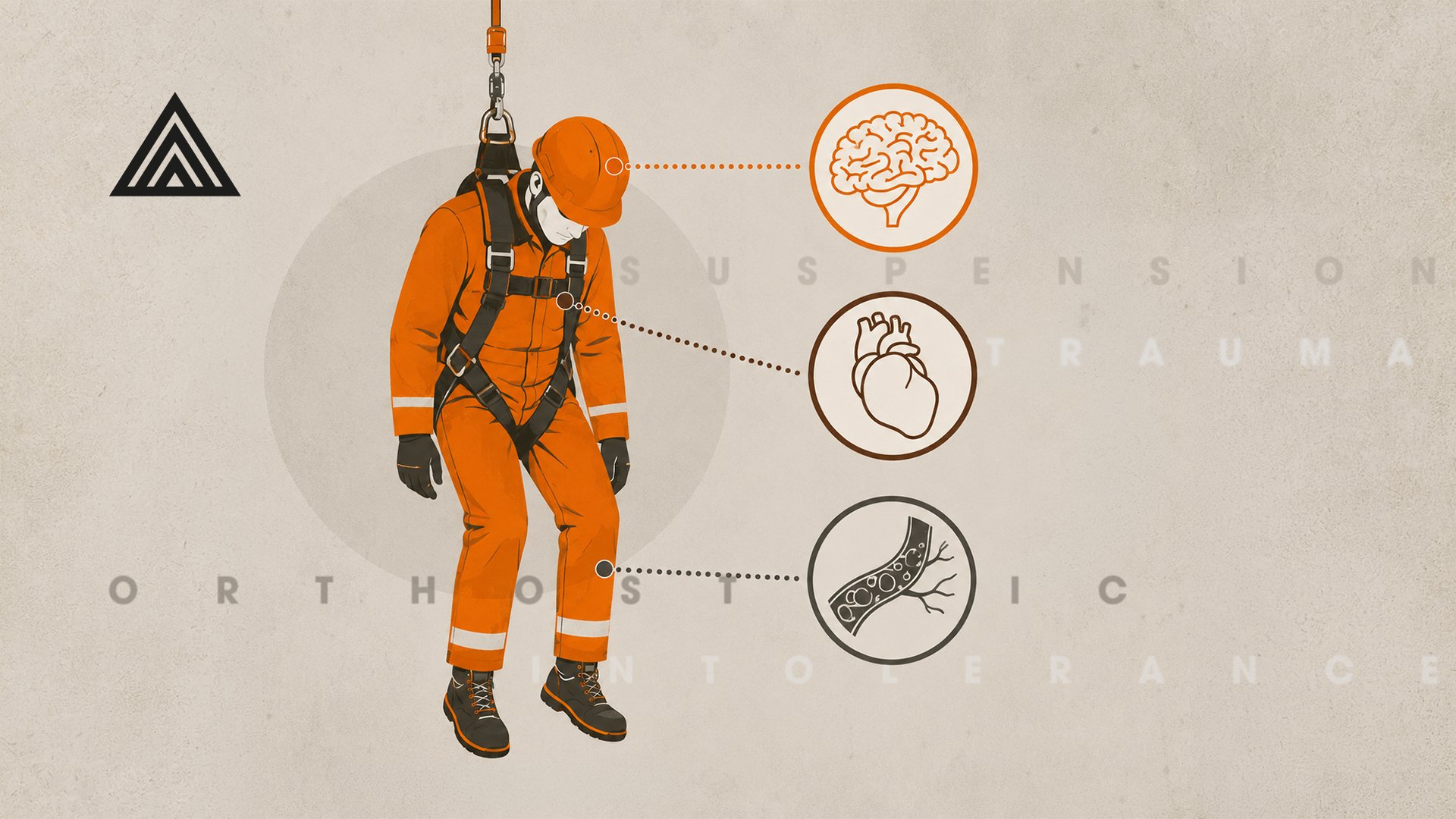
When someone is suspended motionless in a harness, that natural muscle pump is greatly reduced.
As a result:
- Blood begins to pool in the lower limbs.
- Less blood returns to the heart.
- Blood pressure may fall.
- Blood flow to the brain can decrease.
This reduction in cerebral blood flow can quickly produce symptoms that, if left unmanaged, may result in loss of consciousness.
The harness is not the cause. The prolonged upright, motionless position is this physiological response is not unique to suspension. Orthostatic intolerance can occur whenever a person remains motionless in an upright position for a prolonged period. A familiar example is soldiers fainting while standing at attention on parade. They are not suspended, but because they are standing still, the normal contraction of the calf muscles that helps return blood to the heart is greatly reduced. Blood pools in the legs, blood pressure can fall, and blood flow to the brain decreases, leading to dizziness or loss of consciousness.
Suspension in a harness creates the same physiological challenge, but with the added complication that the casualty cannot simply sit down or walk to restore circulation. This is why prompt rescue remains essential.
Common Symptoms of Orthostatic Intolerance,
Symptoms can develop at different rates depending on the individual and the circumstances.
Common signs include:
- Dizziness
- Blurred vision
- Nausea
- Sweating
- Palpitations
- Weakness
- Feeling light-headed
- Loss of consciousness (syncope)
Environmental and personal factors such as heat, dehydration, fatigue, illness and injury can accelerate symptom onset.
This is why there is no universal “safe suspension time.” Every casualty should be treated as an urgent rescue.
What Causes Orthostatic Intolerance During Suspension?
One of the biggest myths surrounding suspension trauma is that the leg straps of a harness act like a tourniquet.
Current evidence does not support this explanation.
When correctly fitted and used, a full body harness is designed to distribute forces safely during fall arrest.
The medical concern arises because the casualty is suspended upright and unable to move their leg muscles effectively, rather than because the harness itself restricts circulation.
A correctly fitted harness remains an essential piece of personal protective equipment and saves lives by arresting falls.
How Do Leg Suspension Strops Help?
Although a casualty may be unable to climb back to safety, allowing them to engage their leg muscles can help reduce blood pooling while awaiting rescue.
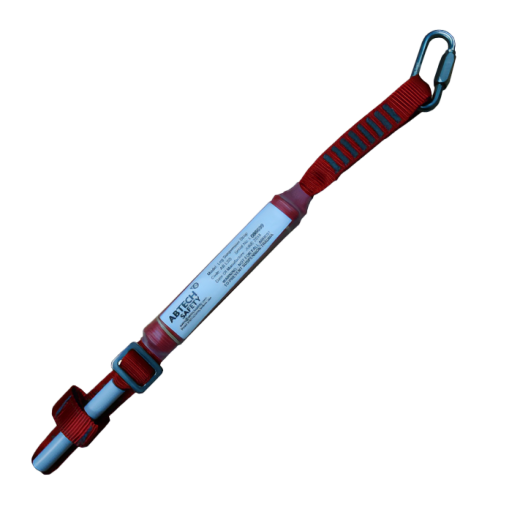
This is where the Leg Suspension Strop (ABLSS) can play an important role.
This simple device allows a suspended worker to stand within the harness and push against the loops using their legs.
This movement helps activate the calf muscles, supporting venous return and improving comfort while rescue is being organised.
Rescue relief steps, such as ABLSS, are not a substitute for rescue.
They are an additional measure designed to help manage the physiological effects of suspension until the casualty can be recovered.
Why Rescue Planning Remains Critical
Fall protection does not end once a fall has been arrested.
Every work at height activity should include a documented rescue plan that considers:
- How the casualty will be reached.
- Who will perform the rescue.
- What equipment is required.
- Expected rescue times.
- Casualty care following recovery – a person rescued following suspension should be treated with the usual prescribed assessment and treatment (A – airway, B – Breathing, C – Circulation).
The objective should always be to recover the casualty as quickly and safely as possible.
Regular rescue training and realistic rescue exercises ensure teams are prepared to respond effectively when every minute counts.
Prevention is Always Better Than Rescue
The best rescue is the one that never becomes necessary.
Before work begins, employers should ensure:
- Appropriate fall protection equipment has been selected.
- Harnesses are correctly fitted and inspected.
- Rescue equipment is readily available.
- Workers understand emergency procedures.
- Rescue teams are trained and competent.
- Rescue plans have been practised, not simply documented.
Combining suitable equipment with effective planning significantly reduces risk should a fall occur.
The Takeaway
The phrase Suspension Trauma remains familiar across the work at height industry, but it is incorrect and the correct term Orthostatic Intolerance. The message is the same:
A suspended casualty should always be treated as a medical emergency requiring prompt rescue.
A certified and compliant fall arrest kit (harness and lanyard) is designed to save lives by arresting a fall. The focus should not be on the harness itself, but on ensuring workers can be rescued quickly and safely before the effects of prolonged motionless suspension become serious.
At Abtech Safety, we help organisations build complete work at height systems that combine compliant equipment, rescue capability and expert advice — because effective fall protection doesn’t stop when the fall does.