

Abtech Tool Box Talks: Harness inspection is more than a box ticking exercises. Paying close attention to the details that matter will decide whether a harness is fit for purpose or not.

Abtech Toolbox Talks
Written by Ian Jones
Managing Director, Abtech Safety
When it comes to working at height, your harness is your last line of defence. Yet pre-use checks and inspections are often rushed, misunderstood, or based on outdated rules of thumb.
This Toolbox Talk cuts through the noise. It explains what actually matters when inspecting a harness, and why even small damage can make it unsafe to use.
The 5mm Myth: Why It’s Wrong
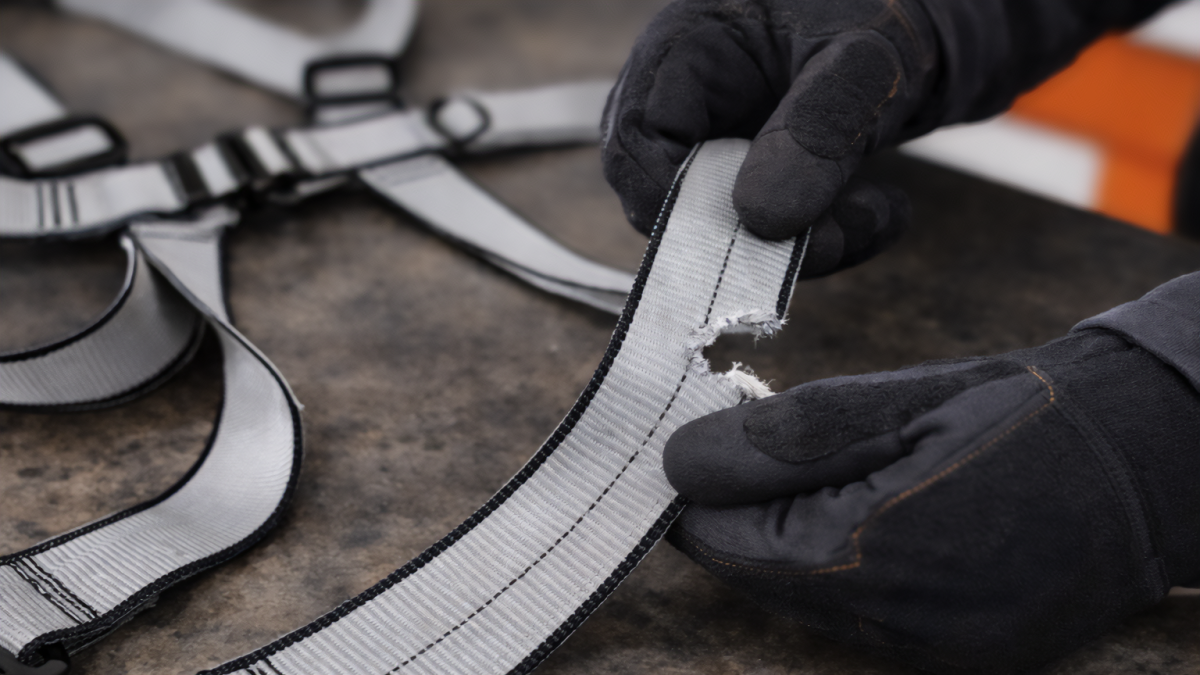
A common belief is that webbing damage is acceptable as long as it’s less than 5mm. This simply isn’t true. This common misconception is often passed down informally and repeated without question.
Any nick or cut to the edge of webbing can significantly reduce its strength. The easiest way to understand this is to think of tearing a sheet of paper. Once the edge is damaged, it tears far more easily.
Even minor edge damage can compromise a harness and should never be ignored.
Check Where Wear Actually Happens
Effective fall protection inspections focus on areas exposed to repeated friction and pressure — not simply the obvious signs of damage.
Pay close attention to:
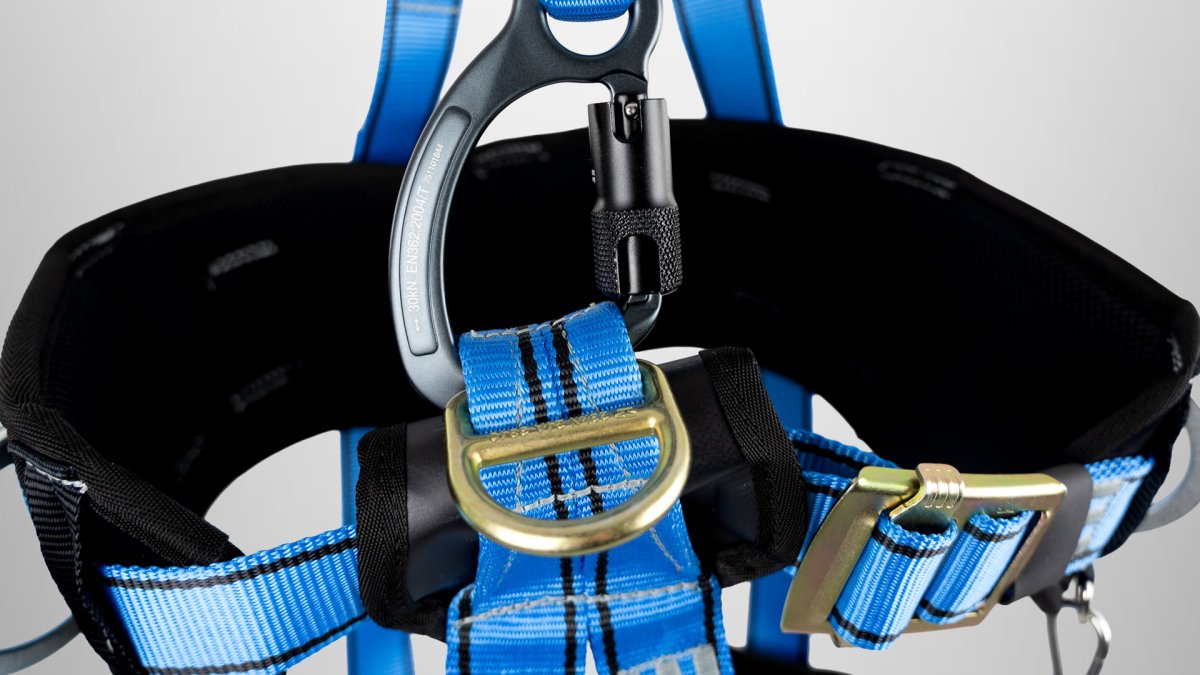
- Webbing under buckles and hardware
Personal-issue harnesses are often adjusted once and left that way. Over time, metal hardware can wear through webbing in very specific locations. - Stitching near attachment points
These areas transfer load during a fall and are critical to overall harness performance.
If you don’t move the hardware during inspection, you may miss the most critical damage.
Labels Matter More Than You Think
Harness labels are not just administrative details. They are a key part of safety and traceability. Without a legible label, you cannot confirm the harness’s history, suitability, or inspection status.
If the label is:
- Missing
- Illegible
- Damaged
The harness should be removed from service.
In some cases, the label includes traceability and inspection information, as well as confirmation of suitability. Where this information is not shown on the label, the equipment’s history must always be recorded and retained elsewhere, such as in the user manual or inspection records.
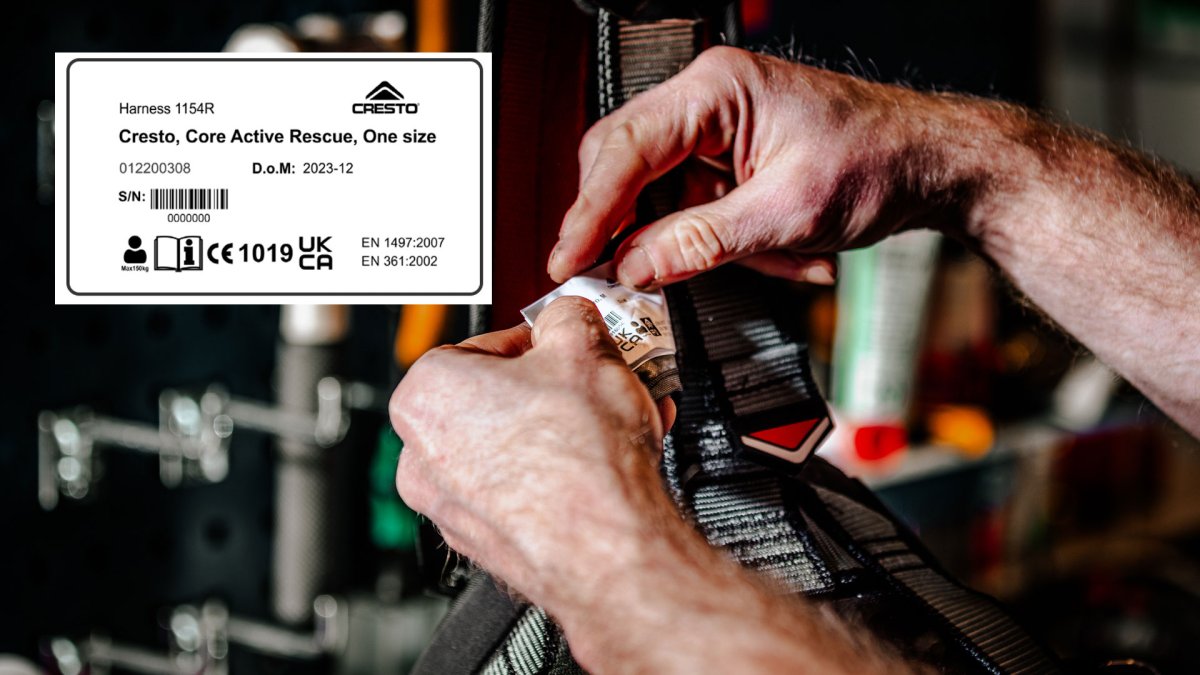
Understanding Harness Lifespan
A harness’s lifespan does not begin when it is manufactured.
A manufacture date does not equal service life. This begins the first time it is put a harness to use.
This is a critical distinction. Storage time is not the same as service life, and inspection records should reflect actual use, not just the date of manufacture.
Fall Protection Inspection is a Safety Skill
Harness inspection isn’t about ticking boxes. It’s about understanding how damage occurs and recognising when equipment can no longer be trusted.
If there is any doubt, the correct action is simple:
Remove the harness from service and seek advice from a competent person.
That decision could prevent a serious incident.
Need Support?
Abtech Safety supports businesses and contractors with correct harness selection and inspection through practical guidance, compliant PPE, and training recommendations. If you’re unsure about inspection criteria, compatibility, or replacement decisions, our team are on hand to help.